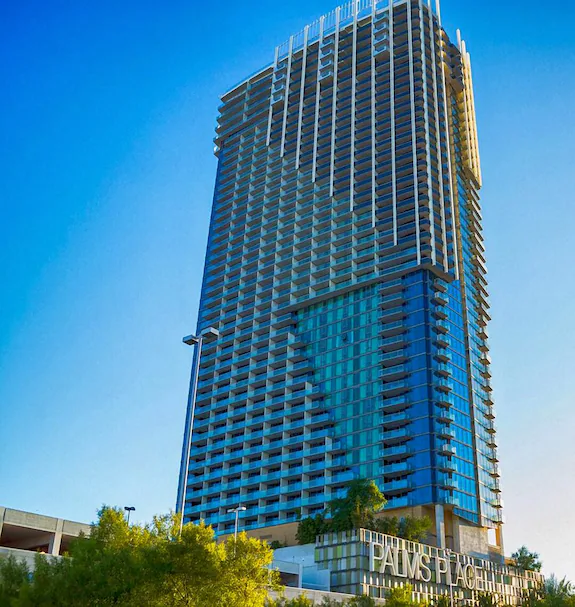
One question I get asked all the time as a multifamily broker here in Las Vegas is: "Why doesn't Las Vegas have more high-rise apartment buildings?"
At first glance, it doesn't make much sense. We're one of the fastest-growing cities in America, we have millions of visitors every year, and rents have climbed significantly over the past decade. So why aren't developers building apartment towers everywhere?
"The answer comes down to one word: economics."
As a multifamily broker here in Las Vegas, I've learned that developers don't build what looks impressive — they build what produces the best return for investors.
The land economics argument
For decades, land in Las Vegas was relatively inexpensive. If you could buy 15 acres and build a 350-unit garden-style apartment community, why spend hundreds of millions more constructing a 30-story tower?
Once you go above five or six stories, everything changes. Construction becomes much more expensive. You need concrete and steel instead of wood framing, elevators, larger foundations, more complex fire systems, and longer construction timelines. The cost per apartment can nearly double.
- Concrete and steel frame instead of wood — significantly higher material cost
- Elevators, mechanical systems, and fire suppression at commercial scale
- Deeper foundations required for tower load bearing
- Longer construction timelines — capital tied up for 24–36 months vs 12–18
- More complex permitting, engineering, and inspections at every floor
The problem is that rents in Las Vegas usually don't double just because the building is taller. That's why the numbers have historically favored three- and four-story apartment communities — the economics are simply better for the developer and the investor.
The 2008 effect on Las Vegas development
Then came the 2008 financial crisis. Several ambitious high-rise projects were cancelled or struggled, and lenders became much more cautious about financing vertical residential construction in the Las Vegas market. Since then, capital has generally flowed toward lower-risk garden-style developments where the pro forma is cleaner and the exit is more predictable.
"The market doesn't reward the tallest building. It rewards the one that pencils out."
What changes this going forward
I do think that will change over time.
As Downtown Las Vegas, the Arts District, and areas around major transportation projects continue to grow, I believe we'll see more mid-rise and high-rise apartments emerge. Symphony Park's Cello Tower delivering 240 luxury condos and the Las Vegas Museum of Art arriving in the Downtown corridor is exactly the kind of cultural infrastructure that historically precedes high-rise residential development in other markets.
But I don't expect Las Vegas to look like Miami or New York anytime soon — because we still have something those cities don't: room to grow outward.
What this means for multifamily investors right now
For investors, this dynamic creates a specific opportunity. Garden-style and low-rise multifamily in Las Vegas is not a second-best substitute for towers — it is the structural product the market has proven it rewards. The 46 commercial multifamily buildings currently listed across the entire Las Vegas metro are predominantly three- and four-story communities, and that is not going to change dramatically in the near term.
Understanding the development economics behind the Las Vegas skyline helps explain why the market behaves the way it does — why supply remains constrained, why rents continue climbing, and why the North Las Vegas corridor near Apex Industrial is attracting investment rather than just attention.
- Las Vegas land availability limits the economic case for high-rise — for now
- Garden-style multifamily remains the dominant institutional product
- Only 46 commercial buildings publicly listed — supply is structurally constrained
- Downtown and Arts District corridors are the most likely high-rise emergence zones
- Understanding development economics is more valuable than reading the skyline
That's what makes Las Vegas unique as a multifamily investment market. It's a place where understanding the economics behind development is often more important than looking at the skyline. And that's exactly the kind of insight I like sharing with apartment owners and investors — because it helps explain where the market has been, and where it's heading next.